

Webinar: Post-ASCO Melanoma Research Update
Published:
05/21/2026
Each year, the American Society of Clinical Oncology (ASCO) Annual Meeting brings together leading cancer researchers and physicians from around the world to share the latest advances in cancer treatment, research, and patient care. For the melanoma community, ASCO often offers an important look at emerging therapies, evolving standards of care, clinical trial updates, and the future direction of treatment.
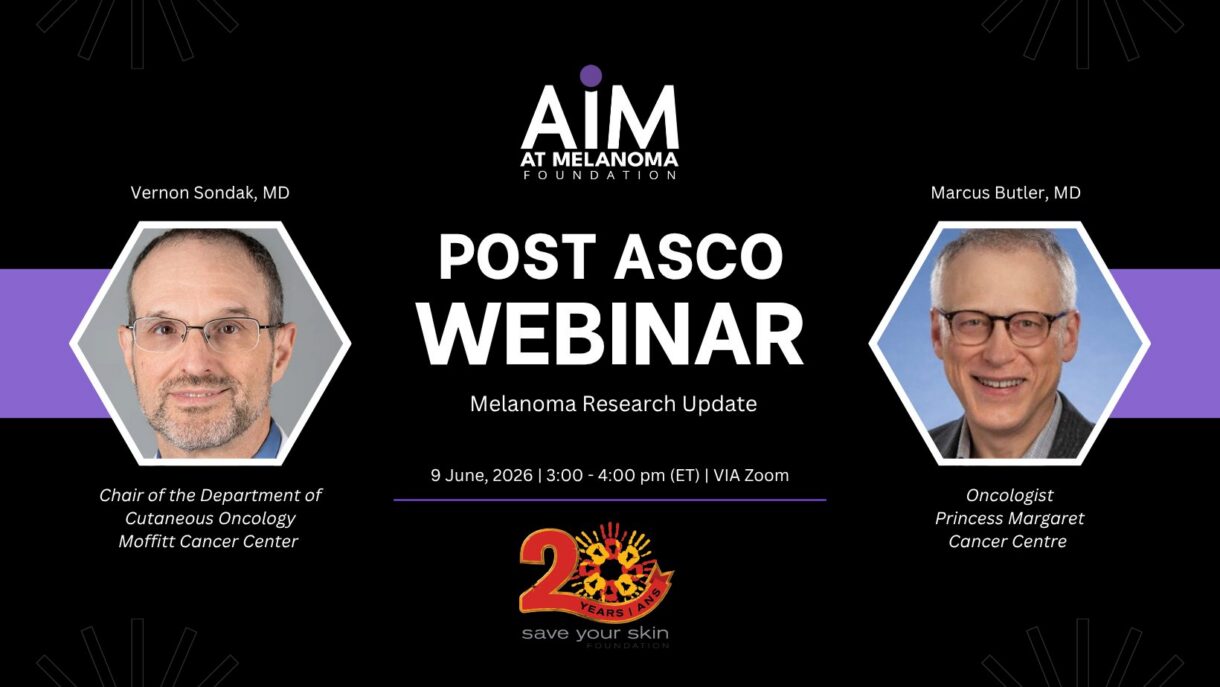
Following the 2026 ASCO Annual Meeting, AIM at Melanoma and Save Your Skin Foundation are partnering to bring these conversations directly to patients and caregivers through a special educational webinar featuring leading melanoma experts from both the United States and Canada.
Date: June 9, 2026
Time: 3:00 – 4:00 PM ET
Location: Virtual Live Webinar via ZOOM
We are honored to welcome Dr. Vernon Sondak, Chair of the Department of Cutaneous Oncology at Moffitt Cancer Center and Research Institute, in Tampa, Florida, and Dr. Marcus Butler, medical oncologist at Princess Margaret Cancer Centre in Toronto.
Dr. Sondak is internationally recognized for his leadership in melanoma surgery, staging, and treatment advances, including his work in sentinel lymph node biopsy and melanoma care for both adults and children. Dr. Butler leads melanoma and skin oncology efforts at Princess Margaret Cancer Centre and is deeply involved in immunotherapy research and clinical trials focused on advancing new melanoma therapies.
Together, they will help break down key themes, emerging research, and important discussions coming out of ASCO and explore what they may mean for patients moving forward.
While the specific topics discussed will depend on the presentations and data shared during this year’s ASCO meeting, the conversation may include:
• Emerging treatment approaches
• New clinical data and research findings
• Evolving standards of care
• The future of immunotherapy and melanoma research
• What patients and caregivers should know moving forward
As research continues to move quickly, conversations like these help make complex scientific information more accessible and meaningful for patients, families, and caregivers navigating melanoma today.
Recent Posts

Aug. 19, 2026
Positive Phase 3 Results for Personalized mRNA Therapy in Melanoma

Aug. 07, 2026
RP1 Approved: A Long Road to a New Option for Patients
Aug. 06, 2026
FDA Approves New Engineered Viral Immunotherapy for Patients with Treatment-Resistant Advanced Melanoma

Aug. 06, 2026
AIM at Melanoma President Samantha Guild Receives SITC’s 2026 Tara Withington Public Service Award

Aug. 03, 2026