


Featured Survivor Story:
How Melanoma Changed Adam Harper’s Perspective on Life
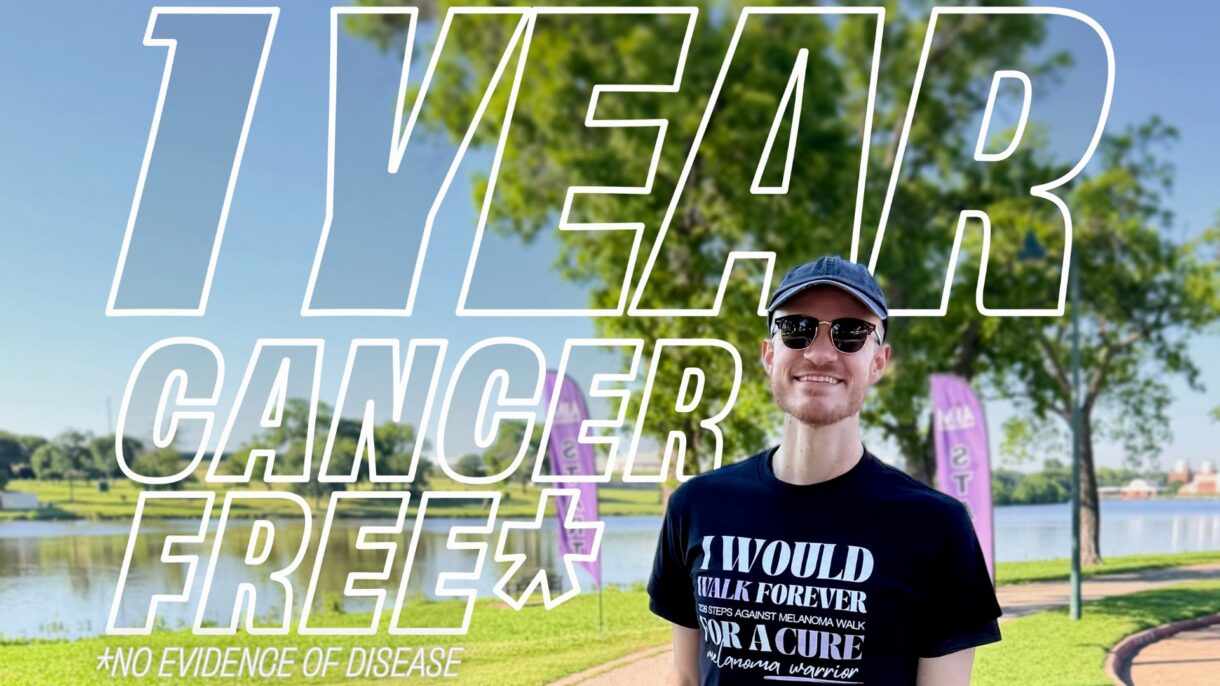
Every few months, Adam Harper sits down with a list of goals.
Some are ambitious. Others are simple: a trip he’d like to take, a book he wants to read, or someone he should call.
Then he starts making a plan.
The ritual is nothing new. Adam, a 31-year-old graphic designer who lives in Dallas, has always been a planner. He likes knowing where he’s headed next.
But after being diagnosed with melanoma, he has a new way of looking at goal-setting and plans.
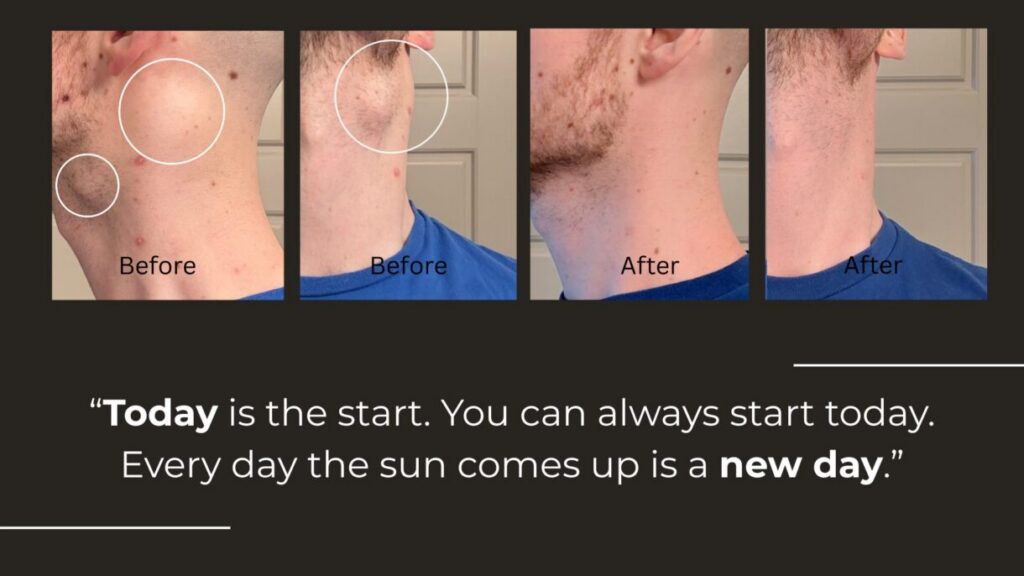
“Today is the start,” he says. “You don’t have to wait till New Year’s. You don’t have to do a whole, huge new resolution each year. You can always start today. Every day the sun comes up is a new day.”
A Planner Confronts the Unexpected
Before his diagnosis, Adam’s days were filled with many of the things he still loves now: reading, cooking, discovering new boba tea shops, catching opening-night movie screenings, and traveling whenever possible.
In early 2025, after months of seeking answers for the unusual lumps in his neck, Adam learned he had locally metastatic melanoma—his primary melanoma had spread to lymph nodes in his neck. At the time, he didn’t know much about the disease, but remembers the way the word “malignant” made his whole body freeze up.
“It was a real deer-in-the-headlights moment,” he says.
At first, Adam focused on logistics. He gathered information, scheduled appointments, and tried to understand unfamiliar medical terminology.
About a month later, he had a vivid dream. He was sitting in a work meeting while people discussed deadlines and demands.
Suddenly, he stood up, flipped over a desk, and screamed, “I have Stage III cancer.”
Then he woke up.
“I was kind of white-knuckling it at first,” he says.
The dream forced him to confront feelings he had largely been trying to manage through planning and preparation.
Learning He Wasn’t Alone
He also felt alone.
“I really didn’t know anybody who had gone through this,” he says.
At 30, he didn’t know anyone else who had experienced melanoma. He thought it would have been comforting to have a friend or peer who could relate to what he was going through.
Looking back, one of the biggest surprises was the support that appeared once people knew what he was facing.
One moment that stands out came during a dental exam related to his diagnosis. Staff members who had seen him at appointments for years offered comfort and support—one held Adam’s hand and another rested a hand on his shoulder.
“It showed me what community really is,” Adam says.
The experience changed how he thinks about friendship and community.
“Don’t wait to make the friend,” he says.
When “Someday” Becomes Today
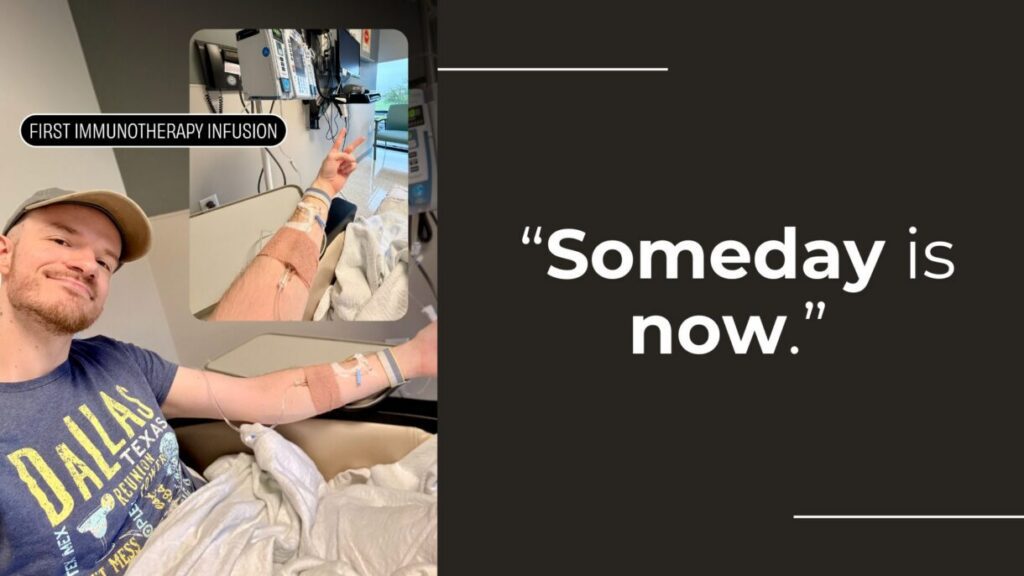
During treatment, a member of his medical team shared a piece of advice that has stayed with him ever since. Too many of us wait for “someday” to reprioritize our lives around the things and people we love.
But, the physician told him, “Someday is now.”
These days, when an idea lands on his quarterly goal list, Adam is less likely to put it off. Whether it’s a trip, a new experience, or time with people he cares about, he’s more conscious of making room for it now.
For people who are newly diagnosed, that’s one of the messages he hopes they hear.
“Take your time. Take time for yourself,” he says.
Finding Joy in Small Things
Sometimes that means celebrating small victories.
After difficult appointments, Adam often rewarded himself with something simple: a cookie from Panera, a bubble bath, or a favorite box of chocolates.
And he’s more mindful of finding ways to bring those little moments of comfort and joy to others, too.
He thinks often of a photo taken the night he found out he had melanoma. He’s surrounded by friends and smiling for the camera.
“It’s crazy to see that photo and understand the duality of it,” he says. “It’s proof that you don’t really know what people are going through.”
It’s Not the Whole Book
Today, Adam and his medical team continue to monitor his health, and he remains grateful for every clear scan.
He still sets goals and makes plans, but he works to keep the lessons from his melanoma experience front of mind.
His advice to other young people facing melanoma is not to let the disease erase what makes them who they are.
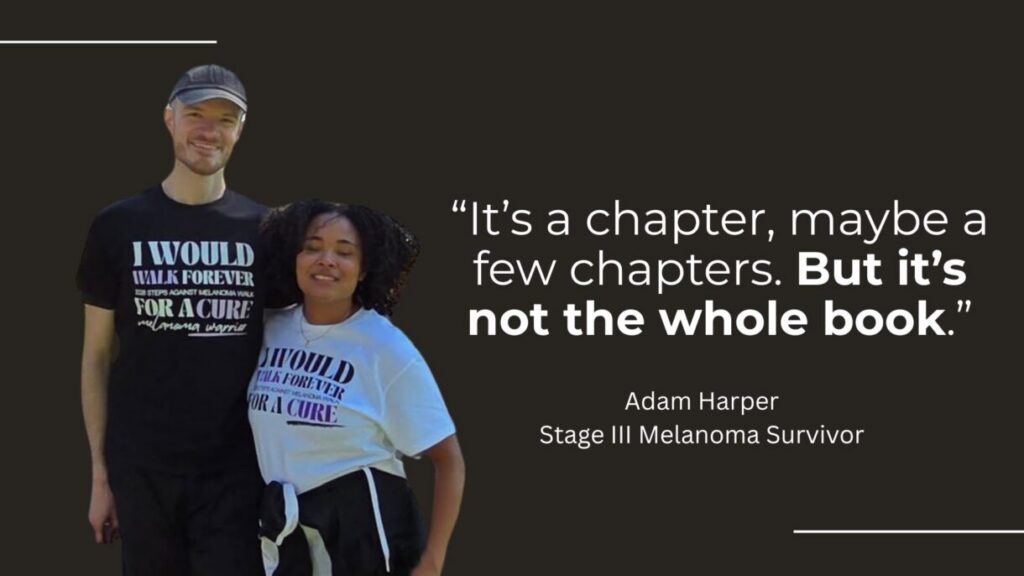
“It’s a chapter, maybe a few chapters,” he says. “But it’s not the whole book.”
Recent Posts

Sep. 30, 2026
Melanoma Treatment: What Happens When It’s Time for a Different Option?

Aug. 31, 2026
Women in Melanoma: A New Chapter in Europe

Aug. 31, 2026
The Legal & Financial Side of a Diagnosis: What No One Tells You

Aug. 19, 2026
Positive Phase 3 Results for Personalized mRNA Therapy in Melanoma

Aug. 07, 2026