

Encouraging results with anzutresgene autoleucel in patients with uveal melanoma and other melanoma subtypes
Published:
06/05/2026
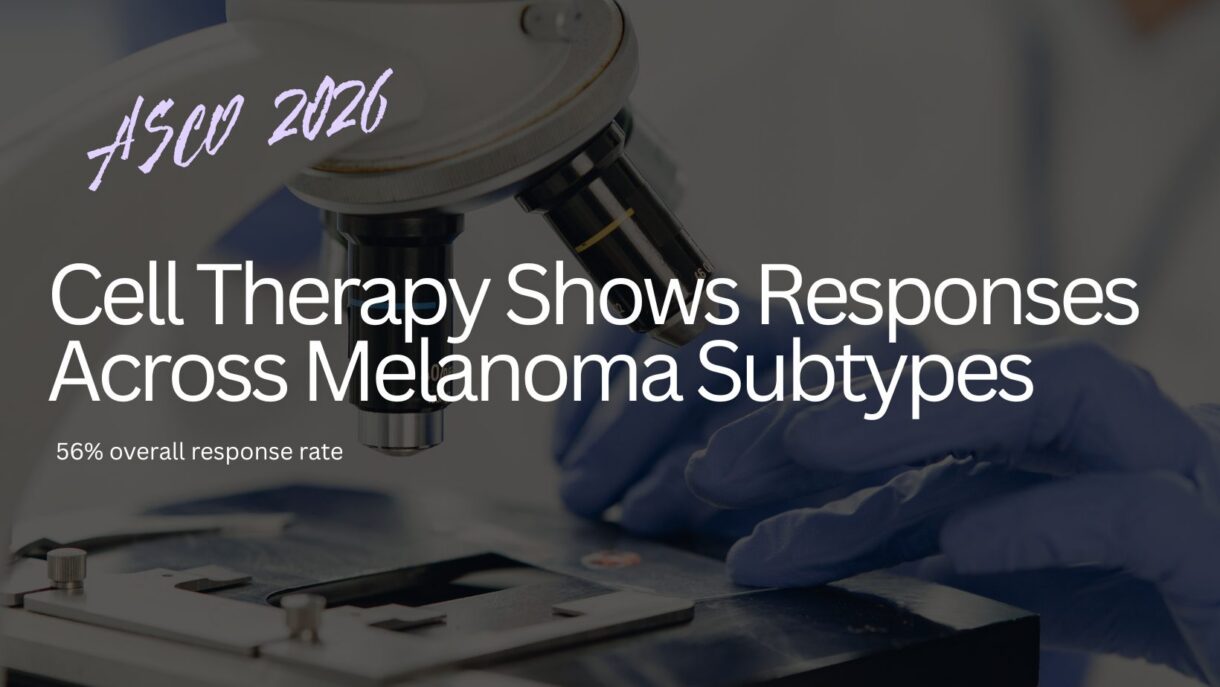
Data for anzutresgene autoleucel presented at the American Society of Clinical Oncology (ASCO) Annual Meeting in Chicago support a future treatment option for patients who do not respond to checkpoint inhibitors or who later relapse after receiving them. These results are especially promising because this treatment was effective in patients with uveal melanoma and in other patients who were heavily treated and had metastatic disease—patients who have few, if any, treatment options.
Anzu-cel (anzutresgene autoleucel), a one-time T-cell receptor (TCR) cell therapy that uses a patient’s own immune T cells to treat cancer, was studied in the IMA203-101 multicenter, Phase 1/2 trial.
To develop T-cell therapies, T cells are taken from a patient’s blood, modified and grown in the lab, and then they are infused back into the patient.
This treatment targets a cancer-specific molecule called preferentially expressed antigen in melanoma (PRAME), a protein found in almost all melanomas, and an immune protein called HLA-A*02:01 that helps the immune system tell the difference between normal cells and harmful ones like cancer cells. The modified receptor on the T cell connects to HLA-A*02:01/PRAME on the cancer cell, similar to the way a key fits in a lock. Then, the T cell attacks the melanoma cell and kills it.
In total, 33 patients with melanoma were studied. There were 14 patients with cutaneous melanoma, 16 patients with uveal melanoma, 2 patients with mucosal melanoma, and 1 patient with an unknown subtype.
The overall response rate (percentage of patients in a treatment group whose cancer shrinks or disappears after treatment) was 56% and the disease control rate (the combination of responses and stable disease) was 91%. Median progression free survival (the point when half of patients experienced disease progression or death) was 6.1 months, and median overall survival (the time from diagnosis or the start of treatment when half are still alive, and half have died) was 16.2 months. Adverse events were predictable and manageable in patients across all subtypes.
These results are important because uveal melanoma is considered to be a “cold” tumor that is usually resistant to immunotherapy. In addition, responses across subtypes were strong and lasted more than 3 years, and effects were observed in sites of metastasis.
Recent Posts

Sep. 30, 2026
Melanoma Treatment: What Happens When It’s Time for a Different Option?

Aug. 31, 2026
Women in Melanoma: A New Chapter in Europe

Aug. 31, 2026
The Legal & Financial Side of a Diagnosis: What No One Tells You

Aug. 19, 2026
Positive Phase 3 Results for Personalized mRNA Therapy in Melanoma
Aug. 07, 2026