

Promising 5-year data for the individualized neoantigen therapy, intismeran autogene, in combination with pembrolizumab (Keytruda)
Published:
06/05/2026
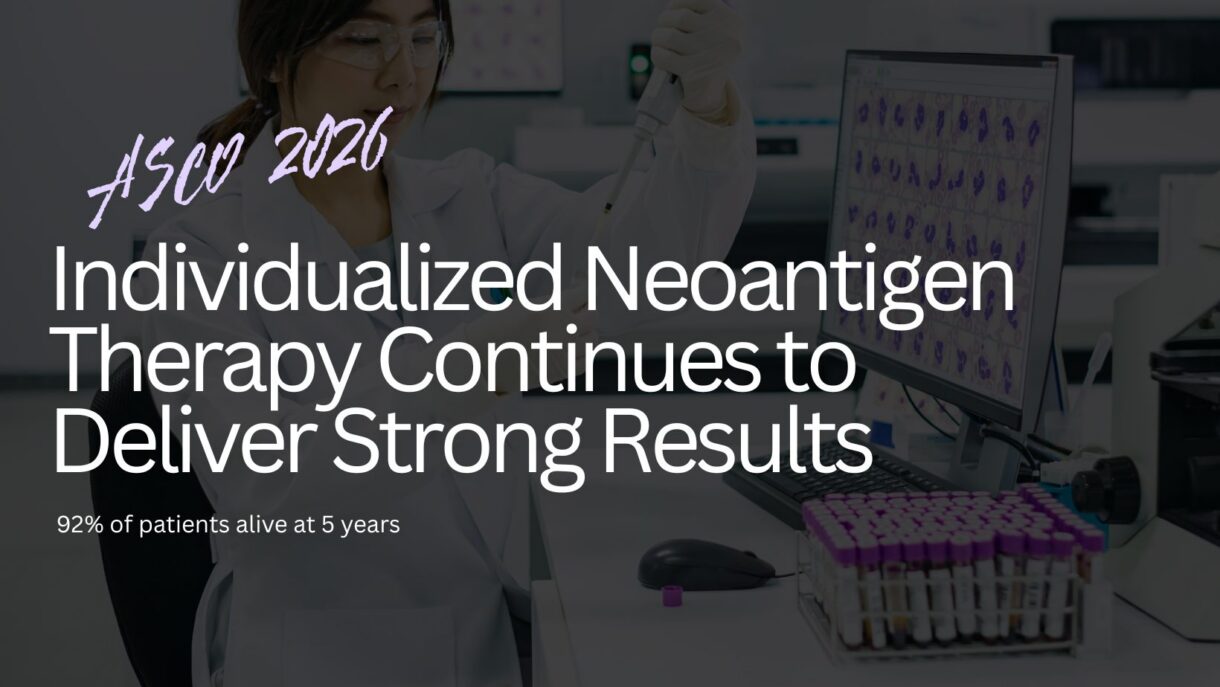
Data presented at the American Society of Clinical Oncology (ASCO) Annual Meeting in Chicago show that an mRNA individualized neoantigen therapy (INT) in combination with pembrolizumab (Keytruda), a checkpoint inhibitor that targets the immune system, is highly effective.
Researchers presented promising data from the KEYNOTE-942/mRNA-4157-P201 Phase IIb trial. In this study, intismeran autogene (mRNA-4157 or V940) was combined with pembrolizumab (Keytruda), a checkpoint inhibitor that targets the immune system. In total, the trial enrolled 107 patients following melanoma surgery to determine if the combination therapy prevented their cancer from recurring better than pembrolizumab alone.
Intismeran autogene is a personalized vaccine that is developed based on a patient’s individual tumor. The vaccine is based on messenger RNA (mRNA) that provides cells with instructions for making proteins. mRNA cancer vaccines teach the immune system to recognize cancer cells as different from normal cells. Tumors from patients are analyzed post-surgery to develop a personalized vaccine for each person that triggers their immune system to produce Tcells that target abnormal proteins produced by cancer cells.
After 5 years, 68.8% of patients who received the combination therapy were cancer-free compared to 49.1% of patients who received pembrolizumab (Keytruda) alone. The combination therapy lowered the risk of cancer recurrence or death by 49% and reduced the risk of distant metastasis (the spread of cancer to another part of the body, beyond the local lymph nodes) or death by 59% compared to pembrolizumab (Keytruda) alone. In addition, 92.2% of patients who received the combination therapy were alive at the five-year time point, compared with 71.3% of patients who received pembrolizumab (Keytruda) alone.
The safety of intismeran autogene in combination with pembrolizumab (Keytruda) was consistent with the earlier 3-year data, which is encouraging. The most common adverse events with intismeran autogene in combination with pembrolizumab (Keytruda) were fatigue (59.6%), injection site pain (59.6%), and chills (51.0%).
The efficacy findings are comparable to the results after three years of follow-up, suggesting that there is a consistent and long-lasting benefit. These results also support that mRNA vaccines like intismeran autogene could work well in combination with immunotherapy for other cancers that are hard to treat
Recent Posts

Oct. 24, 2026
Individualized Cancer Vaccine Shows Encouraging Results for Patients at High Risk for Recurrence

Sep. 30, 2026
Melanoma Treatment: What Happens When It’s Time for a Different Option?

Aug. 31, 2026
Women in Melanoma: A New Chapter in Europe

Aug. 31, 2026
The Legal & Financial Side of a Diagnosis: What No One Tells You

Aug. 19, 2026