

What to Eat—and Not to Eat—During Therapy
What the Experts Know and the Studies Show
In the last 15 years, immune checkpoint inhibitor (ICI) therapy for melanoma has resulted in dramatic improvements in progression-free and overall survival for patients, with up to 43% of patients surviving 10 years after treatment initiation.1 Concurrently, approximately half of patients do not respond to immune checkpoint inhibitors.2 It’s incumbent on us to try to figure out why so many do not respond—and change that outcome.
Recent research has revealed a perhaps surprising fact: that diet has an impact on the success of melanoma treatment with immune checkpoint inhibitors. While we’ve long known that a healthy diet is good for our overall health, the idea that diet could influence treatment outcomes may be surprising to many. Recent studies have suggested what is helpful to eat or ingest—and what is harmful—for patients with melanoma being treated with immunotherapy.
Note: when referring to immunotherapy for patients with melanoma, the immune checkpoint inhibitors, either ipilimumab (Yervoy), nivolumab (Opdivo), and/or pembrolizumab (Keytruda), are the drugs in the regimens. Standard therapy is usually a combination of nivolumab with ipilimumab, but pembrolizumab may also be given.
A Healthy Microbiome Seems to Improve the Immune System
A healthy gut microbiome—composed of bacteria, fungi, and all their secreted byproducts—positively impacts the way individuals with melanoma respond to immune checkpoint inhibitors. But why? It seems that some beneficial microbes, which reside in the gut and tumor, are thought to improve immune system functioning, which bolsters treatment outcomes.3
The opposite effect on health also occurs if the gut or elsewhere in the body has far too many pathogenic or bad bacteria present. Not only could a person with too many pathogenic bacteria become ill from an infection, their presence can impact treatment. For example, the more pathogenic microbes are in the body, the more side effects are reported in patients, suggesting a role for pathogenic microbes in the development of unwanted complications.4
Although not all bacteria within the gut microbiome are beneficial, for patients with melanoma, certain types are helpful with responding to immune checkpoint inhibitors. Specifically, enrichment of the following beneficial bacteria species was found in the guts of responders with melanoma: Akkermansia muciniphila, Bacteroides caccae, Bacteroides stercoris, Bifidobacterium longum, Bifidobacterium pseudocatenulatum, Faecalibacterium prausnitzii, and Ruminococcus.4-7 Some of these intestinal bacterial species were previously known to aid digestion and positively affect gut health by reducing inflammation.
How can patients diagnosed with melanoma support a healthy microbiome? Research suggests encouraging a variety of beneficial bacteria to grow in our guts and sustaining the good bacteria we have. For now, eating high-fiber diets will encourage the beneficial bacteria to inhabit the gut. Many clinical trials are exploring other safe ways to do this, including fecal bacteria transplantation from melanoma survivors who responded well to immune checkpoint inhibitors and introducing live bacterial products into the gut.8
Diet & Immunotherapy: What the Research Says
Eat a High Fiber Diet
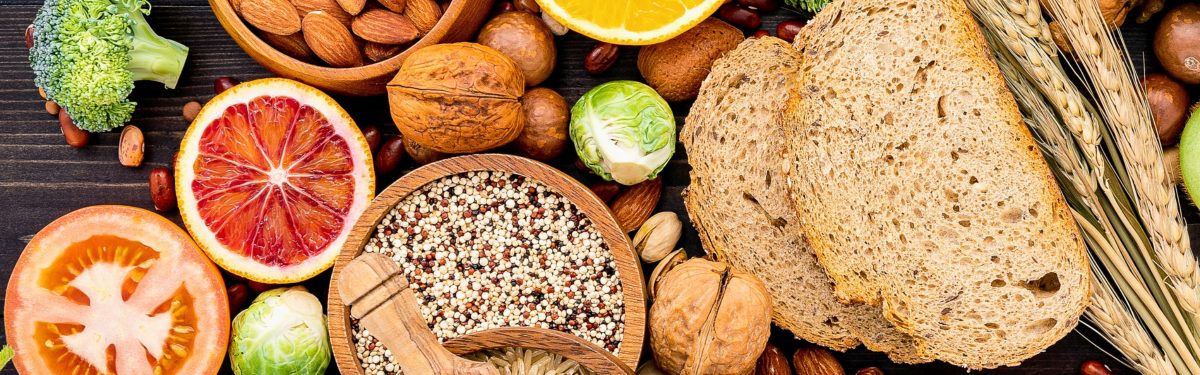
Incorporating fiber-rich foods into your diet such as beans, fruits, grains, nuts, and vegetables is standard advice. However, new research supports additional and extremely important benefits for patients with melanoma on immunotherapy treatment who consume sufficient high-fiber foods.
Among patients with melanoma who had a diet rich in fiber, results from a study showed that median progression-free survival was not reached—meaning they were alive without cancer progression at the end of the study. In the same study, patients with insufficient dietary fiber had a median progression-free survival of 13 months. Interestingly, each increase of 5g in daily fiber caused a decrease in cancer progression or death.9 In other words, the study showed that dietary fiber increased the probability of survival in patients with melanoma.
Another study, a phase 2 double-blind, randomized controlled DIET study, included 28 patients with metastatic melanoma who received a high-fiber diet (50g/day) as a part of the treatment regimen and 15 patients with metastatic melanoma who received a more standard amount (20g) of fiber per day.10-13 The dietary change occurred alongside treatment using immune checkpoint inhibitors. Trial participants received standard therapy (ipi/nivo or pembro) combined with prepared high-fiber meals or standard meals for 11 weeks. The results showed that increasing fiber intake was safe and tolerable and that patients who had an increased fiber intake had a numerically higher response to immunotherapy.
Other clinical trials are recruiting patients with melanoma for interventions with high-fiber diets, which suggests that more data is forthcoming.
Sample 5-Day High-Fiber Meal Plan
Menu planning for someone with cancer that provides approximately 2,000 calories per day, includes about 50 grams of fiber daily, and has around 30% of calories from fat. The menu emphasizes whole, plant-based high-fiber foods, lean proteins, and healthy fats, following cancer nutrition guidelines.
When starting a high-fiber diet, integrate slowly and work up to 50g daily. Otherwise, painful bloating and gas can result.
The following are intended as ideas to incorporate into your preferences to achieve increased fiber into your diet.
Day 1
Total Daily Fiber: 50.5(g)
| Breakfast | Snack | Lunch | Snack | Dinner |
|---|---|---|---|---|
| Fiber = (g) 4(g) • Oatmeal (instant 1 cup) 3(g)• Flaxseeds (1 tbsp) 4(g)• Apple 0.5(g)• Almond milk ( 1 cup) | 4(g)• Pear 2(g)• Walnut halves (1 oz or 14 halves) | 10(g)• Vegetable and lentil soup 4(g)• Whole Wheat . bread (2 slices) 1(g)• Mixed Green Salad | 3(g)• Strawberries (1 cup) 2(g)• Pumpkin seeds (2 tbsps) | • Grilled salmon or fish 5(g)• Quinoa (1 cup) 5(g)• Steamed broccoli 3(g)• Baked sweet potato |
| Meal Total : 11.5(g) | Meal Total : 6(g) | Meal Total : 15(g) | Meal Total : 5(g) | Meal Total: 13(g) |
Day 2
Total Daily Fiber: 56g
| Breakfast | Snack | Lunch | Snack | Dinner |
|---|---|---|---|---|
| Fiber = (g) 10(g)• Whole grain or bran cereal (1/2 cup) 4(g)• Chia seeds (1 tbsp) 3(g)• Banana 0(g)• Low-fat yogurt (1 cup) | 2(g)• Tangerine or nectarine 3.5(g)• Almonds (1 oz or 23 nuts) | 9(g)• Burrito: black bean 2(g)• Salsa 1(g)• Side salad 6(g)• Chickpeas | 4(g)• Apple 2(g)• Peanut butter (2 tbsps) | 0(g)• Roasted chicken breast 3.5(g)• Brown rice (1 cup) 4(g)• Steamed peas (1/2 cup) 2(g)• Sauteed kale (1 cup) |
| Meal Total Fiber : 17(g) | Meal Total Fiber : 5.5(g) | Meal Total Fiber : 18(g) | Meal Total Fiber : 6(g) | Meal Total Fiber : 9.5(g) |
Day 3
Total Daily Fiber: 52g
| Breakfast | Snack | Lunch | Snack | Dinner |
|---|---|---|---|---|
| Fiber = (g) 5(g)• Smoothie with berries, seeds, almond milk, etc. 2(g)• Whole wheat toast 3(g)• Almond butter (2 tbsps) | 8(g)• Raspberries (1 cup) 1(g)• Cashews (1 oz) | 6(g)• Whole-wheat spaghetti (1 cup) 2(g)• Spinach side salad 6(g)• Lentils (1/2 cup) | 2(g)• Carrot sticks 7(g)• Hummus (1/2 cup) 1(g)• Whole-wheat pita | 0(g)• Baked cod or fish 6(g)• Barley (1 cup cooked) 2(g)• Steamed green beans (1/2 cup) 1(g)• Asparagus |
| Meal Total Fiber : 10(g) | Meal Total Fiber : 9(g) | Meal Total Fiber : 14(g) | Meal Total Fiber : 10(g) | Meal Total Fiber : 9(g) |
Day 4
Total Daily Fiber: 51.5g
| Breakfast | Snack | Lunch | Snack | Dinner |
|---|---|---|---|---|
| Fiber = (g) 5(g)• Bran muffin 0(g)• Low fat yogurt (1 cup) 3(g)• Flaxseeds (1 tbsp) 4(g)• Blueberries (1 cup) | 3(g)• Orange 5(g)• Popcorn (air-popped 3 cups) | 6(g)• Chickpeas 9(g)• Vegetable salad 2(g)• Whole-wheat bread (1 slice) | 5(g)• Kiwi (1 cup) 3(g)• Pecans (1 oz or 19 halves) | 0(g)• Stir-fry tofu 2.5(g)• Broccoli 2(g)• Carrots 3.5(g)• Brown rice (1 cup cooked) |
| Meal Total Fiber : 12(g) | Meal Total Fiber : 8(g) | Meal Total Fiber : 17(g) | Meal Total Fiber : 8(g) | Meal Total Fiber : 5.5(g) |
Day 5
Total Daily Fiber: 50.5g
| Breakfast | Snack | Lunch | Snack | Dinner |
|---|---|---|---|---|
| Fiber = (g) 4(g)• Oatmeal (instant 1 cup) 3(g)• Banana 4(g)• Chia seeds (1 tbsp) 0.5(g)• Almond milk (1 cup) | 4(g)• Mango • Pistachios 3(g)(1 oz or 49 nuts) | 2(g)• Whole wheat bread (1 slice) 2(g)• Hummus (2 tbsp) 1(g)• Side salad 13(g)• Soup-lima bean | 2(g)• Dried apricots 1(g)• Celery sticks 2(g)• Peanut butter (2 tbsps) | 0(g)• Chicken breast 5(g)• Quinoa (1 cup) 2(g)• Corn 2(g)• Brussels sprouts |
| Meal Total Fiber : 11.5(g) | Meal Total Fiber : 7(g) | Meal Total Fiber : 18(g) | Meal Total Fiber : 5(g) | Meal Total Fiber : 9(g) |
Avoid Antibiotics
Another way to sustain beneficial gut bacteria is to avoid antibiotics immediately before and throughout treatment with immune checkpoint inhibitors. Antibiotics can broadly kill beneficial and pathogenic bacteria, leading to an overrepresentation of unwanted species. The lack of beneficial bacteria and presence of unwanted species can suppress the immune system and facilitate drug resistance.8 In human trials, antibiotics were associated with decreased overall survival among patients with melanoma and other cancers.14,15
Therefore, medical education for doctors who treat patients with melanoma now focuses on limiting unnecessary antibiotics during treatment. If they must be used for an infection, there is an emphasis on confirming the presence of bacteria with a culture, choosing the shortest effective duration for antibiotic treatment, using a narrow-spectrum antibiotic focused on the specific infection, and then restoring the gut bacteria after use. 8 It’s a different approach to treating infections than what has occurred previously.
Patients with cancer who received antibiotics reported more side effects from immune checkpoint inhibitors than those patients who did not have exposure to antibiotics. In addition, the side effects experienced by patients exposed to antibiotics were more severe in comparison.16 Taken together, these data suggest rethinking the way antibiotics are used during and immediately before treatment with immune checkpoint inhibitors.
Avoid Probiotic Supplements
Probiotics are living microorganisms, like those from the Lactobacillus genus (i.e. lactic acid bacteria, Lactobacillus acidophilus, etc.) that exist symbiotically in humans and are necessary for good health. These organisms thrive under acidic conditions and high temperatures between 90° to 104° Fahrenheit. They protect their hosts from developing an overgrowth of pathogenic bacteria and their host reciprocates by providing them with nutrition to consume.
Sometimes probiotics are found naturally in fermented foods. Perhaps due to an increased interest in the microbiome and gut health in general, the use of supplements sold over the counter and labeled “probiotics” is rising. However, these are not measured to confirm whether healthy, living bacterial cultures are contained in a supplement. Fatalities have been reported from using probiotic supplements.17
It’s important to note that the FDA does not assess dietary supplements for efficacy or safety but evaluates them for contamination or misrepresentation. By allowing a supplement on a store shelf in the U.S., the FDA has not approved its use against a disease. Supplements are allowed to make claims about how it may affect the body without having to prove that claim, unlike drugs.17
The data on probiotic supplements taken by patients with melanoma is not good. A study assessing the gut microbiome measured outcomes in patients with late-stage melanoma treated with immune checkpoint inhibitor therapy. Two groups of patients were included: those who had taken probiotic supplements and those who had not.
Although the data did not reach a level to be considered significant, those who did not use probiotic supplements had a median progression-free survival of 23 months with 68% odds of response to therapy. Those who used probiotic supplements had a worse median progression-free survival of 17 months with 59% odds of response.9 When a scientific study is not considered significant, it means the study must be repeated to make meaningful interpretations from the results.
Because the results suggested a lack of benefit from probiotics, an animal study was established to create a similar scenario and test the human data. Mice with melanoma were treated with immune checkpoint inhibitors with and without probiotic supplements. The probiotics given to the mice were commercial products Bifidobacterium longum or Lactobacillus rhamnosus.
The animals taking probiotics had substantially bigger tumors due to an impaired immune response compared to mice without probiotics. 9 The data from this animal study verified the human study, which lacked statistical significance but showed the same trend. It also suggested a need for careful scientific investigations on commercial products, but despite this worry, currently, the FDA does not do safety tests of OTC supplements. Bottom line: Patients should be cautioned against taking supplements labeled probiotics, as they could make treatment unsuccessful.
Products with Unclear Evidence
Sweeteners
Artificial sweeteners or non-nutritive sweeteners are additive substances used to replace sugar in foods and drinks, without adding unnecessary calories to diets. Cancer researchers continue to investigate the role of these additives, mainly aspartame, saccharin, stevia, and sucralose, on various aspects of human health.
A pre-existing concern about sweeteners was whether they directly cause cancer. In 1970, an animal study that surgically implanted saccharin into mouse bladders showed that some of these animals developed cancer.18 Since then, this connection has been shown to be false. Indeed, several recent studies found no evidence of an association between sweeteners and cancer risk or cancer mortality.19-21 Sweeteners are not causing cancer.
When assessing impacts that may be relevant during cancer treatment, researchers observed that sucralose dampened responses of immune T-cells in mice. The reduction in T-cell activity and function allowed tumor growth and delayed tumor rejection in the mice. Removing sucralose from the drinking water of mice partially reversed the effect.22 The results suggest sucralose suppresses immune responses, but no effects were observed on the gut microbiome, which seems to be in conflict with other study results.22
The previous results were in contrast to other studies that reported aspartame, saccharin, stevia, sucralose and Splenda (sucralose maltodextrin) substantially change the gut microbiome.23-24 One study showed that in mice, Proteobacterial growth and E. coli overgrowth occurred, but it is unclear whether this impacts humans during treatment.24
Although artificial sweeteners are impacting gut health, it is not clearly defined how this affects patients with melanoma. In summary, it may be too soon to understand the impact that sweeteners have, if they have any, on patients with melanoma who are receiving treatment with immune checkpoint inhibitors. Therefore, for now, sweeteners have an unclear impact towards melanoma.
Prebiotics and Fermented Foods
With a newfound emphasis on promoting healthy gut microbes, clinical trials are ongoing to learn how to achieve a therapeutically-helpful microbiome. Some studies suggest that prebiotics support a healthy immune system. Other studies showed that a diet of fermented foods positively alters gut microbiota.
Prebiotics are indigestible food ingredients fermented by beneficial gut microbes, aiding their growth. Several criteria classify prebiotics, mainly fructans, glucose, and oligosaccharides that naturally exist in asparagus, bananas, beans, chicory, garlic, honey, milk, peas, rye, tomatoes, and wheat.25 In other words, prebiotics are the molecular components in food.
A fermented diet consists of fermented products like cottage cheese, fermented vegetables, kefir, kimchi, kombucha, vegetable brine drinks, and yogurt. A study showed after 10 weeks of consuming fermented foods, participants experienced significant changes in the diversity of gut microbiota. They saw an increase in microbial diversity which correlated to the amount of fermented food consumed, particularly for yogurt and vegetable brine drinks, validating an indirect effect on gut microbiota.26
In addition, participants experienced a reduction in markers of chronic inflammatory conditions like chronic stress, rheumatoid arthritis, and type-2 diabetes. These decreases mimicked observations in the group eating a diet high in fiber.26 This suggests that fermented-food diets may have similar benefits to high-fiber diets.
Nevertheless, it is unclear whether a diet rich in fermented foods or prebiotics impacts treatment outcomes in melanoma. Many foods overlap as fiber-rich and prebiotics, and could also be fermented. The data provides additional evidence that consumption influences immune functioning. Similarly, it shows the indirect consequence of diet on health and immunity.
Conclusion
Although medical science does not have a complete understanding of the relationship between what we ingest and our immune system—particularly when our immune system is engaged to fight cancer—results show that some foods are worthy of incorporating and that other products should be avoided. High-fiber diets show positive cooperation with the immune system during therapy with immune checkpoint inhibitors for melanoma. Overall, the enhancement of microbiome diversity by fermented foods appears beneficial for general health and possibly for aiding our immune system in fighting melanoma. In contrast, research suggests that antibiotics and probiotics should be avoided prior to or during treatment. Finally, it might be beneficial to avoid certain sweeteners, but more investigation is needed. The good news is that our diet’s influence on health and cancer treatment is the topic of much current research.
References